Extreme weather
Camping Heater for India: How to Choose a Diesel Tent Heater That Survives -20C and High Altitude
The right camping heater india buyers need is a sealed diesel unit with altitude compensation. How to pick one for -20C Spiti and Ladakh, plus CO safety.
If you are searching for a camping heater in India for real Himalayan cold, the short answer is a sealed-combustion diesel air heater with altitude compensation - not a gas blower, not a catalytic pad, and definitely not an open flame in your tent. At 3,800 metres in Kaza, or up at 4,587 metres in Komic, the nights drop past -20C and the thin air starves any heater that cannot recalibrate its fuel-air mix. A diesel unit like our ThermaEvo AH5 burns its fuel in a fully enclosed chamber, vents exhaust outside the living space, and keeps delivering steady warm air where a cheap gas heater would gutter out and a flame would quietly poison you. We engineer at AdventureX4x4 in Faridabad and prove our cold-weather kit on the frozen Spiti circuit, so this guide is written from the pass, not from a warm showroom.
Why Indian High-Altitude Cold Breaks Ordinary Heaters
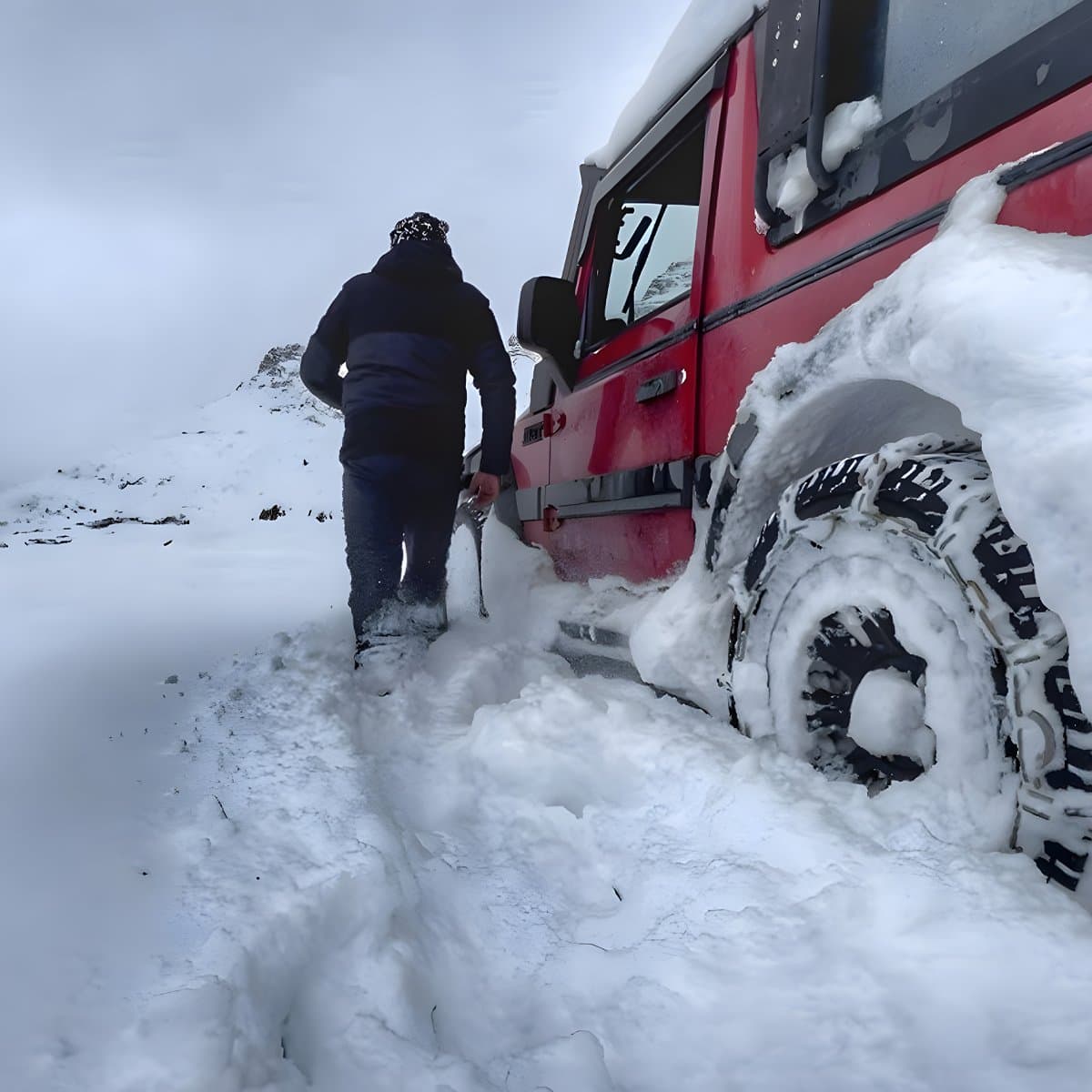
Indian winter overlanding is a different problem from a European campsite or a backyard in Manali. The cold you camp in on the genuine Spiti and Ladakh circuit is not just low - it is high. From December through February the valley floors at Kaza sit near 3,800 m and the high points like Komic and Hikkim push past 4,500 m, and the temperature on those nights falls to -20C and colder. Two forces gang up on your heater at once: brutal cold and thin air. Every heater is a controlled fire, and a fire needs oxygen. As you climb, the air thins, the oxygen per breath drops, and a combustion heater that was tuned at sea level starts running rich - too much fuel, not enough air. It sputters, sooks up, throws black smoke, and eventually faults out. That is exactly the moment, at last light on a frozen plateau, when you cannot afford for it to quit.
This is why the single most important spec for an Indian camping heater is altitude compensation. The ThermaEvo AH5 carries an Altitude Compensation System that automatically recalibrates the fuel-air mixture up to 5,000 m, so it keeps burning clean and putting out steady heat where an uncompensated heater chokes. It is rated to operate from -40C right up to +40C, which is the actual envelope an Indian overlander lives in across a season - sub-zero Lahaul nights one week, a baking Rann afternoon the next. A heater that cannot self-adjust for altitude is a heater built for somewhere that is not the Himalaya.
- Altitude is the silent killer of heaters: thin air at 3,800 m (Kaza) and 4,587 m (Komic) starves uncompensated combustion and makes it run rich, smoke, and fault.
- The must-have spec is altitude compensation - the ThermaEvo AH5 auto-calibrates fuel-air up to 5,000 m so it keeps producing clean, steady heat at altitude.
- Operating envelope matters: the AH5 is rated -40C to +40C, covering both a -20C Spiti night and a hot Rann day in one season.
- Cold also thickens diesel and drains batteries, so your whole heating system - fuel, power, and the unit - has to be specified for the conditions, not just the heater box.
Diesel vs Gas vs Electric: The Real Decision for India
There are three ways to heat a tent, and for Indian high-altitude camping only one of them is the right answer. Gas heaters - butane or LPG - have two failures in the mountains. First, butane simply stops vaporising in deep cold; the canister goes dead in your hand at the temperatures where you actually need heat. Second, most portable gas heaters are unsealed - they dump their combustion, including carbon monoxide, straight into the air you are breathing. In a zipped-up tent at altitude that is a genuine danger, not a theoretical one. Electric heaters are a non-starter off-grid: a fan heater pulls one to two kilowatts, which no camp battery or solar setup on a 4x4 can feed through a sub-zero night, and there is no mains socket at 4,000 m.
A diesel air heater solves all of this. It draws from the cheap, freely available diesel you are already carrying for the vehicle, it produces far more heat per litre than gas, and - critically - it is a sealed-combustion design. The ThermaEvo AH5 uses a fully enclosed combustion system: it pulls combustion air from outside, burns the diesel in a sealed chamber, and pushes the exhaust out through a pipe to the open air, while a separate fan circulates clean, warm cabin air inside. The air you breathe never touches the flame. That separation is the whole reason a diesel air heater is safe to run overnight in a tent or camper where an open gas heater is not.
- Gas (butane/LPG): stops vaporising in deep cold, most units are unsealed and vent CO into your breathing air - wrong tool for high-altitude India.
- Electric (fan heater): needs 1-2 kW continuously and a mains socket - impossible off-grid on a 4x4 battery or solar at altitude.
- Diesel air heater: runs on fuel you already carry, far more heat per litre, and a sealed combustion chamber keeps exhaust separate from cabin air - the only sensible Himalayan choice.
- The AH5 burns 0.18 to 0.48 L/hr depending on setting, so a long, cold night costs only a few litres of the diesel already in your jerry can.
How a Sealed Diesel Air Heater Actually Works
Understanding the airflow is what makes you trust the heater overnight, so it is worth thirty seconds. A diesel air heater runs two completely separate air circuits that never mix. The combustion circuit draws fresh air from outside the tent or vehicle, atomises a tiny amount of diesel, ignites it in a sealed metal chamber called the heat exchanger, and routes the spent exhaust gases out through a dedicated exhaust pipe to the open air. The heating circuit is independent: a fan blows your cabin air across the outside of that hot heat exchanger, warming it without ever exposing it to the flame or the exhaust, and delivers it back into the living space through a duct. Heat crosses the metal wall; fumes do not.
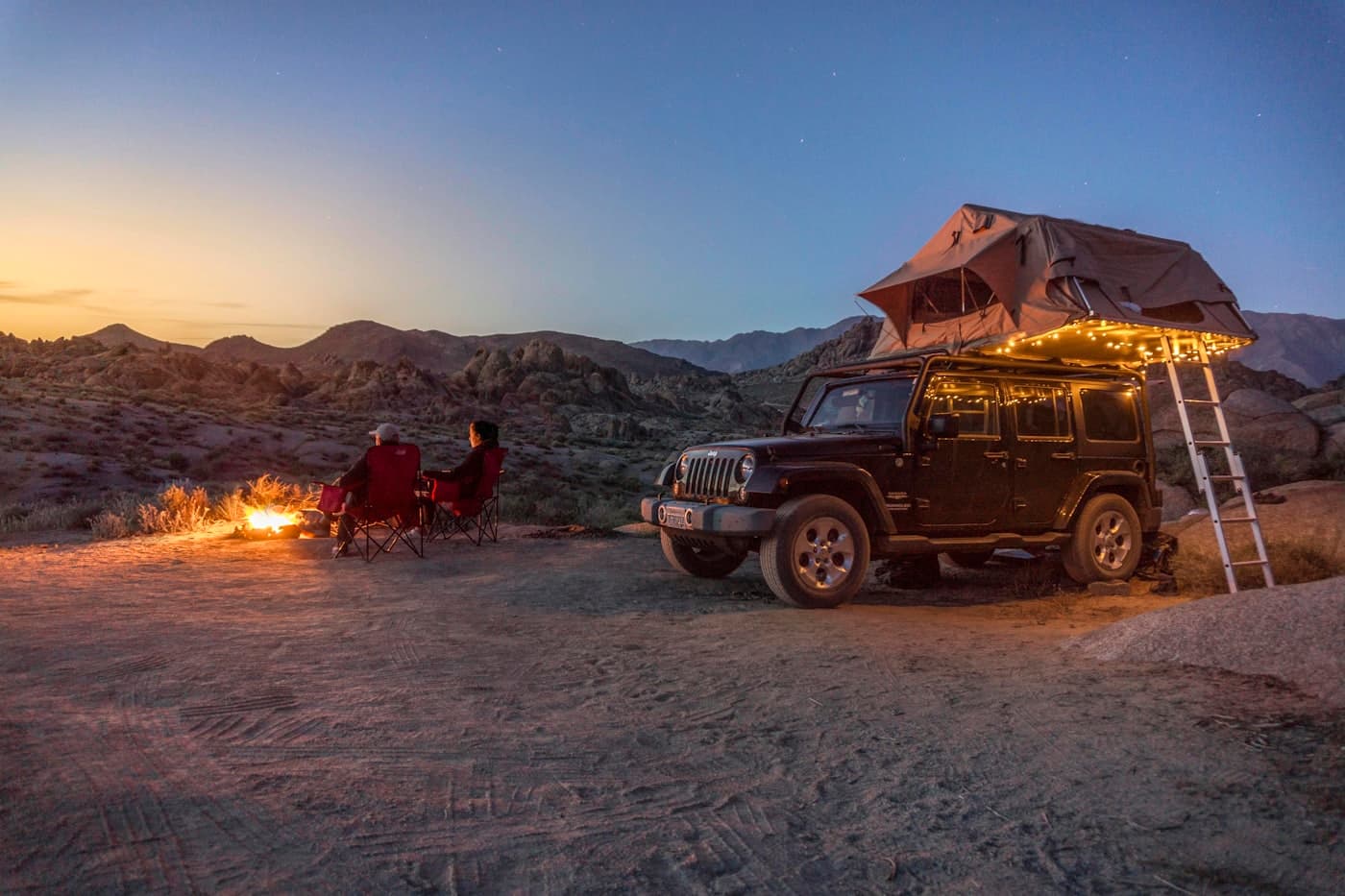
On the ThermaEvo AH5 a brushless motor with a metal fan cage drives that warm-air circuit quietly - the unit runs at 45 dB or below, quiet enough to sleep through. It delivers an airflow of at least 180 cubic metres per hour from a 5 kW output (roughly 17,000 BTU per hour), enough to hold a small camper, a hardshell rooftop tent, or a cabin up to around 300 square feet at a liveable temperature, depending on how well that space is insulated. A smart digital controller lets you set a target temperature and a timer, so you can have the tent warming before you climb in and ticking over gently through the night rather than blasting and cycling. And because the whole system is designed for quick installation with no chimney or complex modification, you are not rebuilding your rig to fit it.
The reason a diesel air heater is safe overnight and a gas heater is not comes down to one wall of metal: in a sealed unit the flame and the exhaust live on one side, the air you breathe lives on the other, and the two never meet.
Dinesh, Founder, on every winter pre-trip briefing
Carbon Monoxide: The Safety Rules That Are Not Optional
Every winter the news carries the same tragedy: campers or travellers found dead in a closed vehicle or tent, killed by carbon monoxide from a coal angeethi, an unsealed gas heater, or a running engine. Carbon monoxide is colourless, odourless, and it kills while you sleep without ever waking you. This is the single most important section in this guide, so read it twice. A sealed-combustion diesel heater like the AH5 is engineered specifically to remove this risk by venting all exhaust outside - but engineering only protects you if you install and run it correctly, and you must still respect the basics.
- Never, ever burn an open flame inside a tent or closed vehicle for heat - no coal angeethi, no kerosene stove, no charcoal, no gas burner left running. This is the leading cause of camping deaths in cold-weather India.
- Vent the exhaust to the open air, always. Route the AH5's exhaust pipe outside the living space and make sure the outlet is clear of snow, fabric, and anything that could block it or let fumes track back inside.
- Keep combustion-air intake clear too: the heater needs to draw fresh outside air to burn cleanly, so do not bury the unit or block its intake with gear or snowdrift.
- Carry a battery carbon-monoxide alarm and put it inside the sleeping space. A 200-rupee CO alarm is the cheapest life insurance you will ever buy - run it even with a sealed heater, as a backstop.
- Trust the protection systems: the AH5 has low-fuel and overheat protection that shuts it down safely, but a CO alarm covers the one thing electronics cannot - a cracked or blocked exhaust route.
Said plainly: the heater is the safe option precisely because it is sealed and vents outside, but the CO alarm is non-negotiable insurance on top of it. We will not let a customer leave for a winter expedition without that alarm in the kit, because the cost of being wrong here is absolute.
Heating the Camp vs Starting the Engine: AH5 and WH5
In real Himalayan cold there are two different cold problems, and AdventureX4x4 builds a ThermaEvo unit for each. The first is keeping you alive and comfortable through the night - that is the AH5 air heater this guide is about, warming the tent or camper so you sleep instead of shiver. The second problem hits at dawn: a diesel engine that has cold-soaked all night at -25C may simply refuse to turn over, because the diesel itself thickens and the battery loses cranking power in the cold. A convoy stranded by a dead engine at altitude is in serious trouble fast.
That second problem is what the ThermaEvo WH5 engine starting system solves. The WH5 is an engine pre-heating unit rated to enable diesel vehicles to start in temperatures as low as -35C to -40C, with BS6 and EURO6 DPF support so it works correctly with modern Indian diesels and helps prevent DPF clogging at altitude. It is a small 2.8 kg unit drawing only 40 W, separate from the cabin heater. The two work as a system: the AH5 keeps the humans warm overnight, the WH5 makes sure the engine actually starts in the morning. For a deep-winter crossing of the high passes, you want both - one is comfort, the other is the difference between driving out and waiting for a tow that may not come.
- ThermaEvo AH5: the cabin/tent air heater - sealed diesel, altitude-compensated to 5,000 m, keeps the living space warm overnight at -20C and below.
- ThermaEvo WH5: the engine pre-heater - enables a cold-soaked diesel to start at -35C to -40C, with BS6/EURO6 DPF support; only 2.8 kg and 40 W.
- Treat them as a system on a serious winter trip: AH5 for survival comfort, WH5 for a guaranteed cold-morning start.
- Both are part of our extreme-weather range, built and tested for sub-zero Spiti and Ladakh rather than a mild-climate market.
Sizing, Fuel, and Power: Specifying the Whole System
A heater is only as good as the system you run it in, and three numbers decide whether yours holds up. First, output versus space. The AH5's 5 kW (about 17,000 BTU/hr) comfortably handles a rooftop tent, a camper interior, or a cabin up to roughly 300 square feet - but that figure assumes some insulation. A bare, draughty space bleeds heat faster than any heater can replace it, which is why pairing the heater with an insulated tent and closing obvious gaps does more for your warmth than simply buying a bigger unit. Second, fuel. At 0.18 to 0.48 L/hr, a full cold night might use two to four litres of diesel, so factor that into your fuel plan alongside the vehicle's own consumption on a long route like the Ladakh loop.
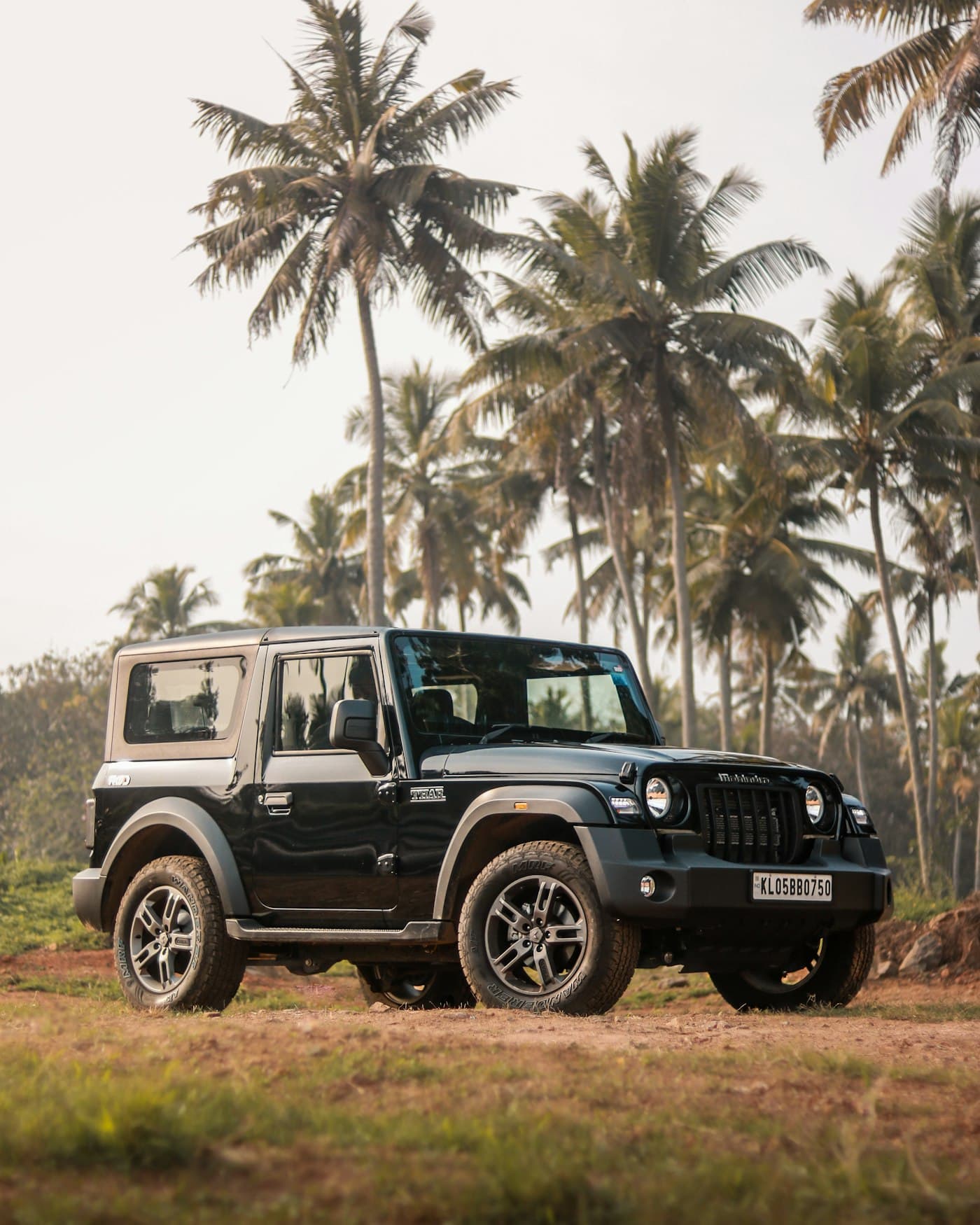
Third, power. The AH5 runs on 12 V DC by default - it can draw from your camp battery or a dedicated power box - with an optional 220 V AC adapter for when you are at a property with mains. The continuous draw is modest compared to an electric heater, but in deep cold a starter battery loses capacity, so a separate camp battery or power station to feed the heater and your lights keeps you from waking up to a flat vehicle. The unit itself is compact and portable: 6.9 kg, packing down to about 38 x 14 x 15 cm, so it travels easily in a Thar, a Jimny build, or a camper without eating your whole storage budget. It ships with a one-year warranty, and for fitment guidance our team in Faridabad will walk you through the install.
How to Make the Final Call
Do it in this order and you will not buy the wrong heater. Confirm you need altitude compensation - if your trips touch the high Himalaya, you do, so the heater must self-calibrate to 5,000 m. Choose diesel sealed-combustion over gas or electric, because only diesel gives you safe overnight heat off-grid in deep cold. Match the 5 kW output to a well-insulated space rather than chasing a bigger number into a draughty tent. Plan your fuel and a separate camp battery so the system actually runs through the night. And on any genuine winter expedition, add the WH5 for a guaranteed cold-morning start and a CO alarm for absolute safety. Get those steps right, in that order, and a frozen camp at -20C becomes a warm, liveable basecamp instead of a survival test.
Frequently Asked Questions
What kind of camping heater is best for high-altitude India?
A sealed-combustion diesel air heater with altitude compensation is the best camping heater for high-altitude India. Gas heaters stop vaporising in deep cold and most vent carbon monoxide into your breathing air, and electric heaters need mains power you do not have off-grid. The ThermaEvo AH5 burns diesel in a fully enclosed chamber, vents exhaust outside, and auto-calibrates its fuel-air mix up to 5,000 m, so it keeps delivering safe, steady heat where other heaters fail at altitude.
Will a diesel heater still work at 4,000 metres in Spiti or Ladakh?
Yes, provided it has altitude compensation. As you climb, thin air starves an uncompensated heater so it runs rich, smokes, and faults. The ThermaEvo AH5 has an Altitude Compensation System that automatically recalibrates the fuel-air mixture up to 5,000 m, which covers the whole Spiti circuit including Kaza at about 3,800 m and Komic at 4,587 m. It is rated to operate from -40C to +40C, so a -20C night at altitude is well within its envelope.
Is it safe to run a diesel heater inside a tent overnight?
Yes, when it is a sealed-combustion unit installed correctly. The ThermaEvo AH5 uses a fully enclosed combustion system: it burns the diesel in a sealed chamber and routes all exhaust outside through an exhaust pipe, while a separate fan circulates clean cabin air that never touches the flame. It also has low-fuel and overheat protection. You must still vent the exhaust to open air, keep the intake clear, and run a battery carbon-monoxide alarm inside the sleeping space as a backstop. Never use an open flame, coal angeethi, or unsealed gas heater inside a tent - that is the leading cause of cold-weather camping deaths in India.
How much diesel does the ThermaEvo AH5 use through a cold night?
The AH5 consumes 0.18 to 0.48 litres per hour depending on the heat setting, so a long, cold night typically uses around two to four litres of diesel - the same fuel already in your jerry can for the vehicle. That is far more heat per litre than a gas heater delivers, and it means heating is a minor line in your overall fuel plan rather than a separate logistics problem. Factor it in alongside the vehicle's own consumption on long routes like the Ladakh loop.
What size space can a 5 kW camping heater warm?
The ThermaEvo AH5 puts out 5 kW, roughly 17,000 BTU per hour, with an airflow of at least 180 cubic metres per hour, which can hold a rooftop tent, a camper interior, or a cabin up to about 300 square feet at a comfortable temperature. That figure depends heavily on insulation - a draughty, uninsulated space bleeds heat faster than any heater can replace it. Pairing the heater with an insulated tent skin and closing obvious gaps does more for your warmth than simply buying a larger unit.
Do I need the ThermaEvo WH5 as well as the AH5?
They solve two different cold problems. The AH5 keeps you and the cabin warm overnight. The WH5 is an engine pre-heater that lets a cold-soaked diesel actually start at -35C to -40C, with BS6 and EURO6 DPF support for modern Indian diesels. For a casual cold-weather camp the AH5 alone is enough. For a deep-winter crossing of the high passes, where an engine that will not turn over at dawn strands the whole convoy, you want both - the AH5 for comfort and the WH5 for a guaranteed cold-morning start.
Can I run the AH5 off my vehicle or camp battery?
Yes. The AH5 runs on 12 V DC by default and can draw from a camp battery or a dedicated power box, with an optional 220 V AC adapter for use at a property with mains. Its continuous draw is modest compared to an electric heater, but because a starter battery loses capacity in deep cold, we recommend feeding the heater from a separate camp battery or power station rather than the vehicle's starting battery. That keeps you from waking up to a flat vehicle after a long night of heating, lights, and charging.
Ready to kit out?
Everything in this guide is built, stocked and backed by AdventureX4x4 — engineered for Indian cold and proven from Spiti to Ladakh.