
Recovery gear
Best 4x4 Recovery Gear in India: Build a Layered Recovery Kit That Gets You Home
The best 4x4 recovery gear india guide: boards, kinetic ropes, soft shackles, winch rings and air-down science, built for Spiti cold and Ladakh terrain.
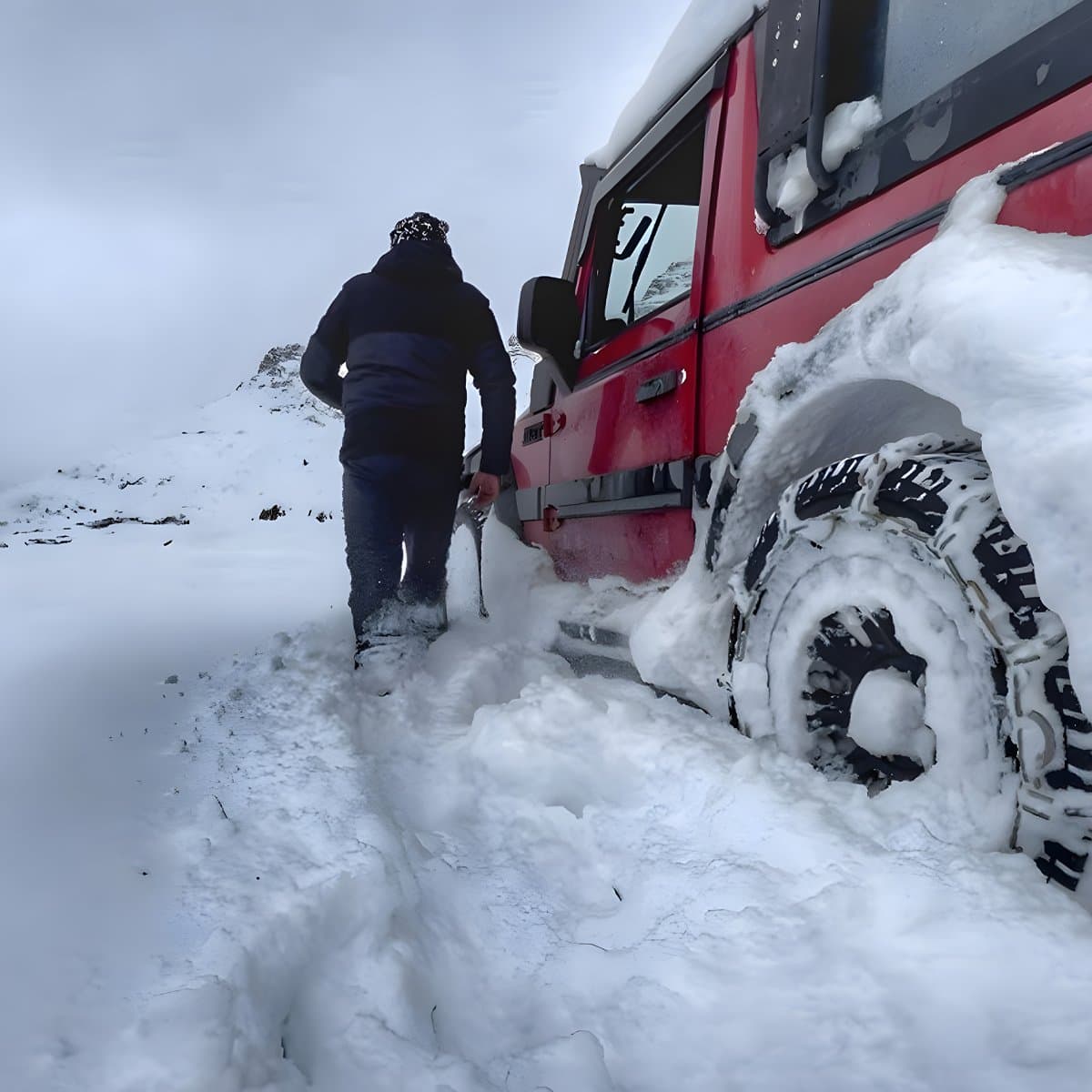
Getting stuck is not a question of if - it is a question of where and how cold it is when it happens. A Thar buried to the diffs in Rann salt-sand, a Jimny spinning on a Spiti ice patch at 4,200 metres, a Fortuner sunk in monsoon mud on a Western Ghats switchback - these are the moments that separate overlanders who packed properly from the ones waiting six hours for a tractor that may never come. The best 4x4 recovery gear in India is not one hero product. It is a layered system, where each piece buys you a way out before you ever need to call for help. At AdventureX4x4, we engineer that system for Indian cold and Indian terrain, and tested from Spiti to Ladakh, not for a showroom floor.
This guide walks you through that layered approach the way a seasoned trip leader would: start with what gets you out alone, then escalate only as far as the situation forces you. Most marketplace shopping carts get this backwards - they sell a cheap winch first and forget the boards, the air, and the safety kit that actually do the heavy lifting nine times out of ten. We will fix that order here, and explain the science so you understand why each layer matters.
The Layered Recovery System: Self-Recovery First, Winch Last
Think of recovery as four layers stacked from least to most committed. You always reach for the lowest layer that solves the problem, because every step up adds load, energy and risk. Carrying gear from every layer is what a real overland rig looks like - not a winch bolted to a bumper and nothing else in the boot.
- Layer 1 - Traction and self-recovery: recovery boards under the tyres, no second vehicle, no anchor. This solves most sand, mud and snow bogging on its own.
- Layer 2 - Air down: drop tyre pressure to grow your contact patch before you even think about a strap. Free traction, zero gear stress.
- Layer 3 - Kinetic snatch: a stretchy kinetic rope and a second vehicle gently yank you free using stored energy, not a brutal jerk.
- Layer 4 - Winch and ring: when you are alone and truly planted, a winch to a rated anchor, with a recovery ring to double your pulling power and redirect the line.
Notice that the winch is the last resort, not the first. A winch is heavy, slow to rig, needs a solid anchor (often absent on open Ladakh plateau or a sand sheet), and concentrates enormous force on a single line. Boards and air-down get you moving in minutes with none of that drama. Buy the bottom of the stack first; it is the part you will use most.
Layer 1: Recovery Boards - Your First and Most-Used Tool
Recovery boards are the single most useful piece of self-recovery gear an Indian overlander can carry. You wedge them under the spinning tyres, ease onto the throttle, and the tyre bites the reinforced lugs instead of digging deeper. No second vehicle. No anchor. No drama. They work in soft Rann sand, deep monsoon mud, and Spiti snow alike.
The AdventureX4x4 traction boards are moulded from reinforced 100 percent nylon - not the brittle recycled plastic that snaps cold or melts under a spinning tyre on a hot day. The high-visibility orange matters more than it looks: when you are digging in failing light at altitude, you need to find them again, and a passing convoy needs to see them. We offer a full-size 2pc set (3rd gen) for serious bogging and a mini 3rd gen pair that lives easily in a smaller rig like a Jimny. Mount them on a board mount kit on your roof rack or rear door so they are out, deployed and back in two minutes flat.
Nine recoveries out of ten on a Himalayan trip are solved with boards and a tyre pressure drop. The winch comes out for the tenth - and you are very glad you also packed the first nine solutions.
AdventureX4x4 trip leader, Spiti winter convoy
Layer 2: Air Down - The Free Traction Most People Skip
Airing down is the most underrated trick in off-roading, and it costs you nothing but a few minutes. Dropping your tyre pressure from a tarmac 32-35 PSI down to roughly 15-20 PSI off-road lengthens and widens the tyre's contact patch. That bigger footprint floats you over soft sand instead of knifing in, conforms over rocks for grip on Himalayan trail, and claws through mud and snow far better than a rock-hard tyre ever will. It also softens the ride, which your spine will thank you for after a day of Ladakh washboard.
The discipline is in airing back up. Run low pressure on tarmac and you risk rolling the tyre off the bead on a fast corner, overheating the sidewall, and shredding it. So the rule is simple: air DOWN to 15-20 PSI before the rough stuff, and air back UP to 32-35 PSI before you hit the highway. To do that fast you need real air, not a toy pump.
- Air Compressor Kit with LCD: 150 PSI, 200 LPM, 12V, with a preset auto-stop so you dial a pressure and it shuts off on its own - no standing there watching a gauge in the cold.
- Manual Air Compressor: the simpler, rugged version for overlanders who want fewer electronics in the loop.
- ALL-TOP 4-Way Inflation: fills all four tyres at once to +/- 0.1 PSI accuracy, which turns a 20-minute roadside chore at a Ladakh pass into a five-minute job.
- Rapid Tyre Deflator: 0-250 PSI range, dumps pressure fast and accurately so airing down at the trailhead takes seconds, not minutes.
- Portable Battery Box: a 12V power centre to run your compressor and accessories away from the starter battery (battery not included).
Layer 3: Kinetic Snatch - Stretch, Don't Jerk
When boards and air are not enough and you have a buddy vehicle, you go kinetic. This is where the most dangerous mistakes in Indian off-roading happen, because plenty of people still snatch with a steel chain or a dead-static tow strap. That is how you bend tow points, break recovery hardware, and turn a hook into a projectile.
A kinetic rope is engineered to stretch. The AdventureX4x4 kinetic recovery rope is 1 inch by 20 feet, rated to a 48,000 lb breaking strength, built from double-braided Nylon N66 with a Mil-spec protective coating. As the recovery vehicle drives off, the rope stretches and stores energy like a giant elastic band, then releases it as a smooth, progressive pull that eases the stuck rig out. Compared to a static chain, that stretch dramatically reduces the shock load on both vehicles' mounting points - it snatches gently instead of hammering. For heavier pulls or flat towing we also build kinetic tow straps in 3 inch by 20 feet (35,000 lb) and 4 inch by 20 feet (46,500 lb).
Layer 4: Winch and Recovery Ring - When You Are Truly Planted and Alone
Solo, deeply stuck, no buddy vehicle - this is what a winch is for. Anchor to a rated point (a tree-trunk protector around a stout trunk, or a recovery point on another vehicle) and the winch reels you out under its own power. The single most important upgrade to any winch setup is a recovery ring, sometimes called a snatch ring. The AdventureX4x4 recovery ring is rated to 66,000 lb and has no moving parts to seize, freeze or fail. Run your winch line around it and you can redirect the pull around an obstacle or, in a double-line rig, effectively double your winch's pulling power while halving the load and speed. It is lighter, stronger and safer than an old steel snatch block, and there is nothing to maintain.
Boards vs Winch: Which Do You Actually Need First?
This is the question every new overlander asks, and the honest answer surprises people. If you can only buy one thing, buy boards, not a winch. Boards are cheaper, lighter, faster to deploy, need no anchor, work solo, and handle the vast majority of real-world bogging - sand, mud and snow. A winch is a specialist tool for the rare, serious, solo recovery where there is a solid anchor to pull against. On the open sand of the Rann or a treeless Ladakh plateau, there often is no anchor at all, and your boards will save the day while the winch line has nothing to grab. Build the layers in order: boards and air first, kinetic rope next, winch and ring last.
The Safety Kit That Is Not Optional
Recovery forces are violent. A snapped strap or shackle under tens of thousands of pounds of load becomes a lethal projectile. The gear that keeps you alive is not glamorous, but it is mandatory, and this is exactly where cheap marketplace kits cut corners that can get someone killed.
- Synthetic soft shackles: the AdventureX4x4 1/2 inch soft shackles are rated to 48,300 lb and sold as a 2-pack. Because they are braided synthetic, not steel, a failure drops harmlessly to the ground instead of flying through a windscreen. They are lighter, will not damage your bumper, and are easier on cold hands than a frozen steel D-shackle.
- Safety winch cable damper: a reflective damper that hangs over a rope or cable under load. If the line lets go, the damper's weight drives it to the ground instead of letting it whip. On a kinetic or winch pull, a damper is mandatory, not a nice-to-have.
- Rated recovery points: never hook to a tie-down loop, a tow ball, or a suspension component. Connect only to engineered, rated recovery points. The strongest rope in the world is useless attached to something that tears off the chassis.
This is the line between AdventureX4x4 and the gear you scroll past on a marketplace listing. We do not compete on being the cheapest orange board or the cheapest strap on IndiaMART. We compete on the things that matter when you are 200 km from the nearest help at minus 15 degrees: real breaking strengths, genuine Mil-spec coatings, reinforced nylon that survives Himalayan cold, and a system designed by people who have actually dug a rig out of a Spiti snowbank. Cheap gear is expensive the day it fails.
What Every Indian Overlander Should Carry
If you are building your first proper recovery kit for Indian conditions, here is the loadout that covers Spiti ice, Ladakh plateau, Rann sand and monsoon mud without dead weight.
- A 2pc set of reinforced nylon recovery boards (mini pair for a Jimny-size rig), with a mount kit.
- A rapid tyre deflator and a real air compressor (LCD auto-stop or the 4-way inflator) to air down and back up.
- A 1 inch x 20 ft kinetic recovery rope for buddy-vehicle snatches.
- A 2-pack of 1/2 inch synthetic soft shackles for safe, projectile-free connections.
- A reflective winch cable damper for every kinetic or winch pull.
- A recovery ring to double winch power and redirect the line when you do run a winch.
- A portable battery box so you can run air and accessories without flattening your starter battery.
Pack it in that order and you will solve the overwhelming majority of recoveries yourself, fast, before anyone else even gets a strap out. That is what engineered, India-cold recovery gear is for - getting your rig, and everyone in it, home.
Frequently Asked Questions
What is the most important piece of 4x4 recovery gear to buy first?
Recovery boards. They are the cheapest, lightest and most-used recovery tool, they work solo with no anchor or second vehicle, and they handle the majority of real-world bogging in sand, mud and snow. Buy a reinforced nylon set before you spend on a winch.
Why use a kinetic rope instead of a chain or tow strap?
A kinetic rope stretches and stores energy, then releases it as a smooth, progressive pull that eases a stuck vehicle out. A static chain or strap delivers a brutal shock load that can bend tow points and turn hardware into a projectile. The AdventureX4x4 1 inch x 20 ft kinetic rope is rated to 48,000 lb and snatches gently.
What tyre pressure should I run off-road in India?
Drop to roughly 15-20 PSI off-road to grow your tyre's contact patch for grip on sand, rock and snow. Then air back up to 32-35 PSI before you return to tarmac, because running low pressure on the highway risks rolling the tyre off the bead and overheating the sidewall.
Are soft shackles really safer than steel shackles?
Yes. Synthetic soft shackles like the AdventureX4x4 1/2 inch 48,300 lb pair are braided rope, so if the connection fails the shackle drops to the ground instead of flying like a steel projectile. They are also lighter, kinder to your bumper, and easier to handle with cold hands at altitude.
Do I really need a winch cable damper?
Yes, and it is not optional. A damper is a weighted, reflective bridle that hangs over the line during a kinetic or winch pull. If the rope or cable breaks under load, the damper's weight drives the line to the ground instead of letting it whip toward people. Use one on every recovery under tension.
What does a recovery ring do that a snatch block does not?
A recovery ring redirects your winch line around an obstacle or doubles your pulling power in a double-line pull, just like a snatch block - but with no moving parts to seize, freeze or wear out. The AdventureX4x4 recovery ring is rated to 66,000 lb, lighter than a steel block, and needs zero maintenance.
Ready to kit out?
Everything in this guide is built, stocked and backed by AdventureX4x4 — engineered for Indian cold and proven from Spiti to Ladakh.