
Repair & Recovery
How to read and cross a river in a 4x4
Water crossings end more expeditions than any other single thing. The skill is mostly in the part before you drive.
Water crossings have ended more of the expeditions we have helped recover than rock, mud, and mechanical failure combined. And almost every single one was avoidable. That is the uncomfortable truth about river crossings: the danger is rarely in the driving, which is the easy part. It is in the decision to drive, which people make too fast, with too little information, usually because the group is impatient and the far bank looks close. The skill of crossing a river in a 4x4 is mostly the skill of the ten minutes before you drive into it - the walking, the reading, and the honest call about whether to cross at all. Get those ten minutes right and the crossing is almost an anticlimax. Get them wrong and you are the story other overlanders tell.
Walk it first - always, no exceptions
Never drive a crossing you have not walked. This is the one rule that prevents the most disasters and the one people are most tempted to skip when the water looks shallow and the group is in a hurry. Wade it on foot, with a stick or trekking pole for balance and probing, facing upstream so the current does not buckle your knees from behind, and learn three things at once. The real depth, which is almost always greater than it looks from the bank, because moving water and a sloping entry deceive the eye. The firmness of the bottom - whether it is gravel that will hold a wheel, or soft silt and sand that will swallow it, or loose boulders that will pitch the vehicle and rip a sidewall. And the strength of the current, which you feel in your legs in a way you cannot judge from the seat. Walk the actual line you intend to drive, not just the easiest place to wade. And the hard rule that follows from all of it: if it is too dangerous to walk, it is far too dangerous to drive.
Reading the river
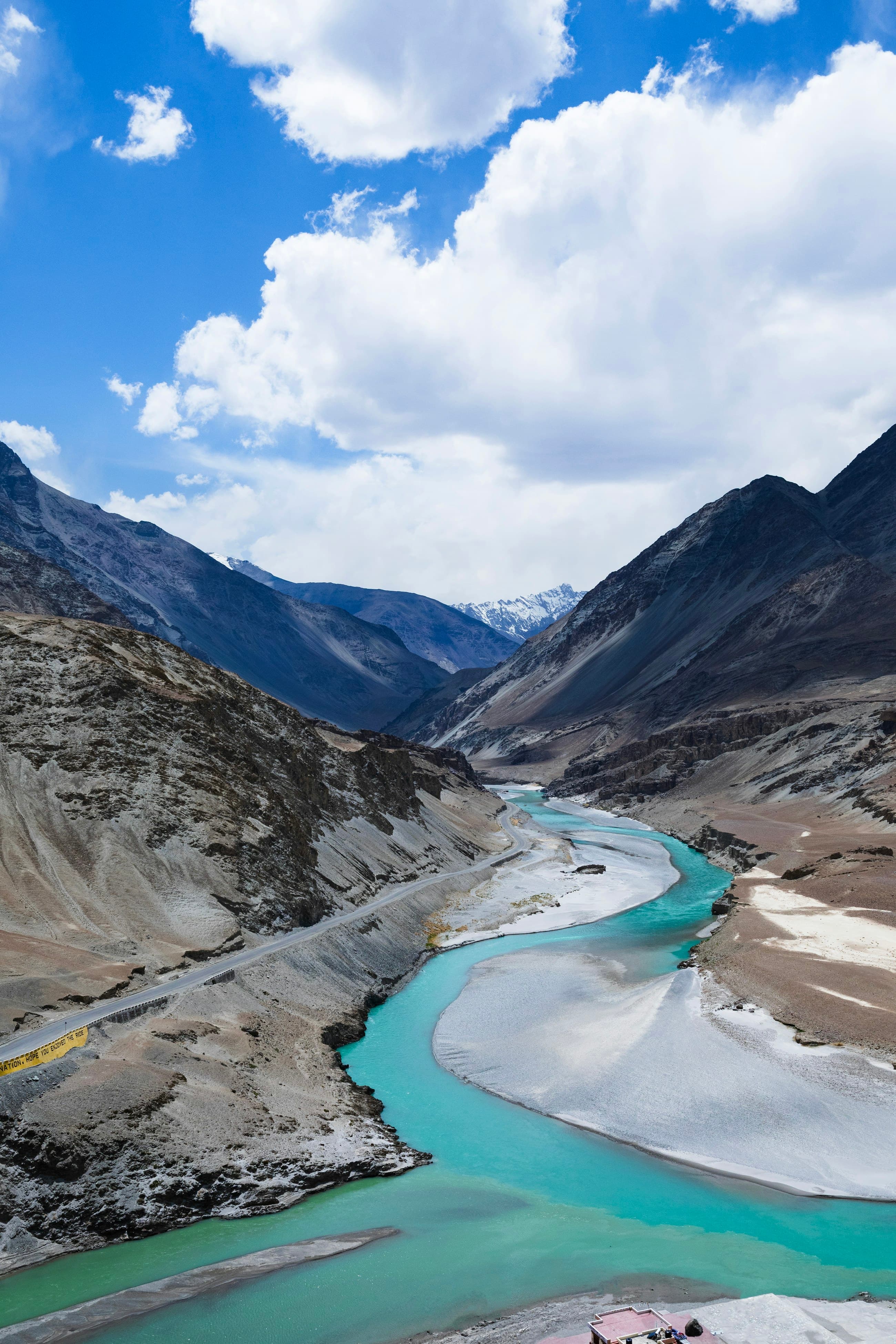
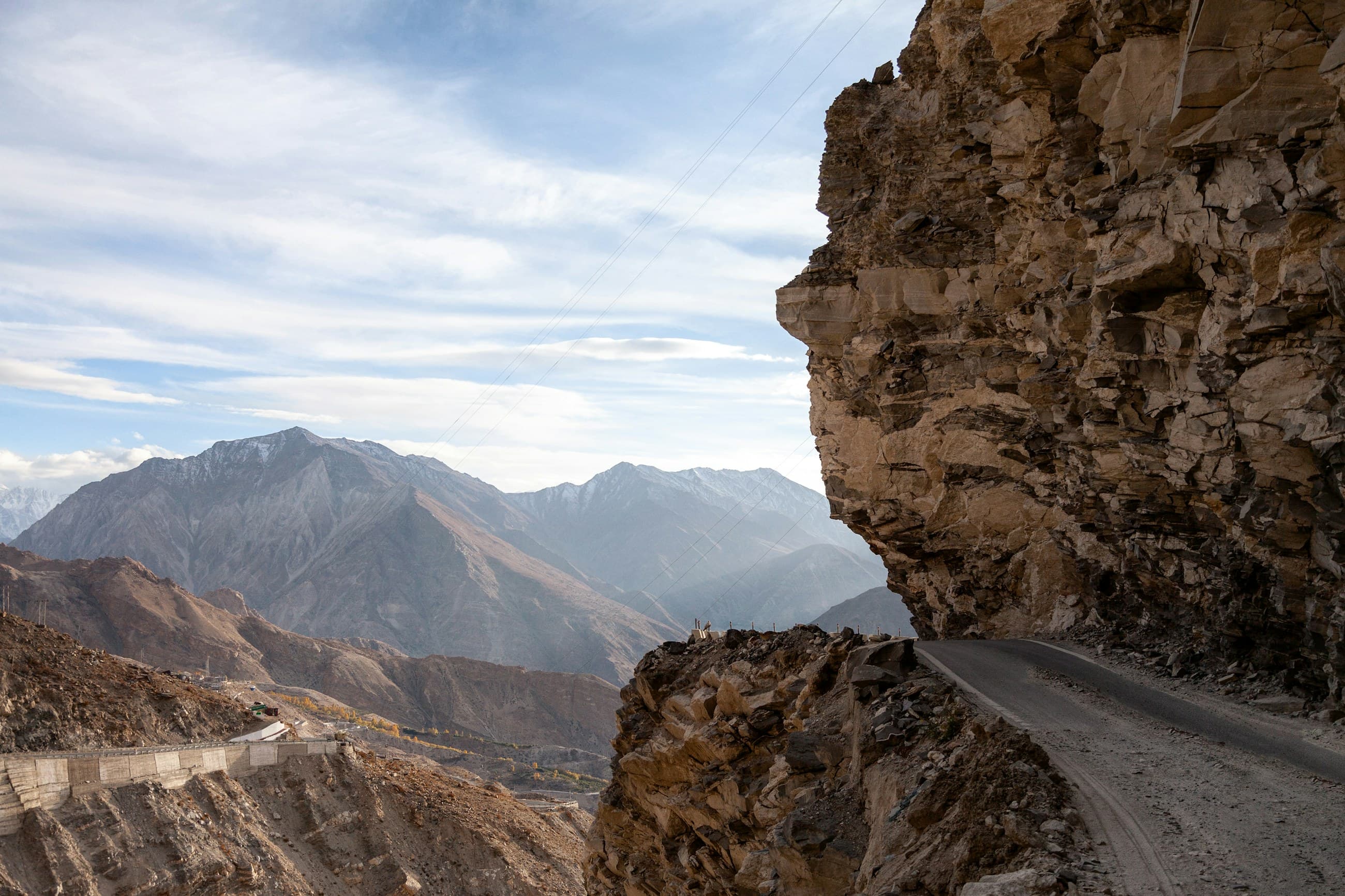
Beyond depth, current, and bottom, the surface of the water tells you where the safe line is if you learn to read it. Smooth, flat, slow-moving water generally means it is deeper there - the river has room, so it is calm. Riffles, ripples, and small standing waves usually mean shallower water running over a firmer, rockier bed, which is often where you want to be even though it looks busier. A V-shape pointing downstream typically marks the channel between obstacles; a V pointing upstream marks a rock or obstruction just below the surface that you steer around. On a glacial Himalayan crossing, timing is itself a reading skill: snowmelt swells these rivers through the day, so the same ford that is a benign trickle at seven in the morning can be a pushy, dangerous flow by mid-afternoon. On a Ladakh run we will routinely cross the difficult fords early and plan the day around water levels, because the river at dawn and the river at three in the afternoon are different rivers. Read the water and the season together.
The decision
- Depth above your vehicle's safe wading height: do not cross, full stop - a stock Thar or Gurkha is roughly 500 mm, a Jimny less, a touring Fortuner around 700 mm, but the air intake position is what actually decides it
- A soft, silty, or rocky-uneven bottom: the depth limit drops sharply - be conservative, because a vehicle that bogs or gets pitched mid-stream is a far worse problem than one that simply could not start
- Strong current: water pushes a vehicle sideways and can lift it, so current can rule out a crossing that the depth alone would allow - around half a metre of fast flow starts to move a two-tonne vehicle
- When in doubt: wait for the level to drop, cross at first light when glacial flow is lowest, or find another route - the river does not negotiate, and patience is free
Preparing the vehicle
Once you have committed to a crossing, a few minutes of vehicle prep changes the odds. Know your true wading depth, which is set by the height of the air intake above all else - water drawn into the engine is a hydrolock, and that is a destroyed engine, not an inconvenience. Select the right gear and drive range before you enter, low range and a low gear for control, so you are never changing gear mid-stream with water around the bellhousing. On longer or deeper crossings, some overlanders fit a wading blind or a radiator cover to reduce the bow wave pushing water into the engine bay and to stop the fan throwing water onto the electrics - worth knowing about even if you do not run one. Be wary of an electric radiator fan on a deep crossing, because a fan biting into water can flex and crack. And accept that water gets into places afterwards: after any serious crossing, check the differential and gearbox oils for the milky look that means water ingress, and re-grease anything that should have stayed dry. The crossing is not over when you reach the far bank.
The crossing itself
If you commit, the execution is simple and deliberate. Pick your exact line on the walk and commit to it - mid-stream is not the place to improvise. Enter slowly to avoid swamping the engine bay with a wall of water, then build to a steady, single, deliberate pace and hold it: enough momentum to push a small, consistent bow wave ahead of the vehicle, which actually creates a slight trough behind it around the engine bay and keeps water from surging back in, but never so fast that you lose control or throw water over the bonnet. Do not stop mid-stream and do not change gear - both let the bow wave collapse and water rush back around the engine. Keep a constant throttle and a straight, confident line to your chosen exit point on the far bank. Have a spotter positioned and a recovery plan agreed before the wheels get wet - a second vehicle upstream-ready with a kinetic rope and rated points, everyone clear on the signal to abort. By the time you are driving, every hard decision should already be made. The crossing is just the calm execution of a plan you built on foot.
The crossing is decided on foot. By the time you are driving, the hard thinking should already be done.
A worked example: a Ladakh ford done right
Put the whole sequence together on a real crossing. You are on the way to Pangong and the road dips into a glacial stream that, even at half past eight in the morning, is moving with intent - milky grey, cold enough to make wading genuinely unpleasant. The group wants to push through and keep to schedule. Instead you stop, and you and one other person wade it with poles, facing upstream. You learn the bed is firm gravel on the left line but soft and uncertain straight ahead where it looks easiest, that the depth on the firm line is around mid-shin and well within the Thar's limit, and that the current is pushy but manageable at that depth. You walk back, brief the line, position a spotter on the far bank and a second vehicle ready upstream with a kinetic rope on rated points. Then you select low range and a low gear, enter slowly, build to a steady walking pace, push a small consistent bow wave, do not stop, do not change gear, and roll out the far side onto the firm exit you picked. The whole thing takes ten unhurried minutes and is utterly uneventful - which is the goal. Compare that to the alternative, where someone drives the easy-looking soft line at speed without walking it, bogs the front axle mid-stream, swamps the engine, and turns a ten-minute crossing into a half-day recovery and possibly a ruined motor. Same river. The difference was entirely the ten minutes on foot.
Frequently Asked Questions
What is the safe wading depth of common Indian 4x4s?
As a rough guide, a stock Mahindra Thar or Force Gurkha will wade around 500 mm with care, a Maruti Jimny somewhat less, and a touring Toyota Fortuner in the region of 700 mm. But treat these as starting points, not promises - the figure that actually matters is the height of your air intake, because that is where a hydrolock begins. Lifts, snorkels, and modifications change the number, and a soft bottom or strong current lowers the safe depth well below the still-water rating.
Why cross Himalayan rivers early in the morning?
Because they are fed by glacial and snow melt, which builds through the day as the sun works on the ice upstream. A ford that is a shallow, benign trickle at seven in the morning can become a deep, fast, genuinely dangerous flow by mid-afternoon. On Ladakh and Spiti routes we plan the day around this - hit the difficult crossings at or soon after dawn when the water is lowest, and avoid being caught at a major ford in the late-afternoon peak. Timing is one of the most useful river-crossing skills there is.
What do I do if the vehicle stalls mid-crossing?
Do not restart it. If the engine has stopped in deep water, cranking it risks drawing water into the cylinders and turning a recovery into a destroyed engine. Get the occupants out safely on the upstream side, and use the recovery plan you set up before entering - the spotter and the second vehicle with a kinetic rope on rated points - to pull the vehicle out without starting it. This is exactly why you never cross without a recovery plan already in place and a buddy vehicle ready. Once it is out and drained, then you assess the engine, not before.
Put it into practice
Carry the kit that gets you unstuck - and learn to use it.